Boundaries are a necessary element in any healthy relationship as they allow us to preserve…
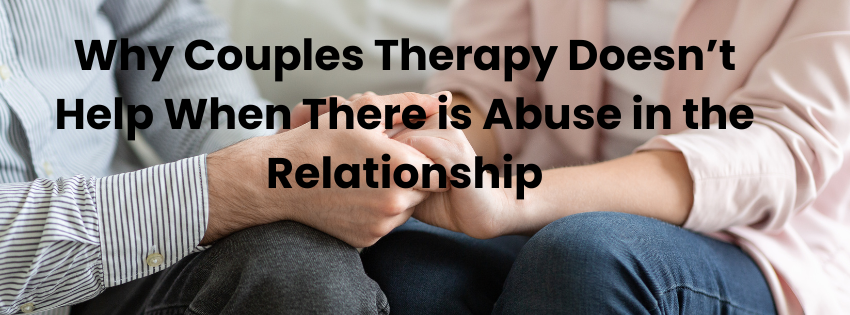
How Therapy Can Unknowingly Empower Abusers and Silence Victims
As a psychologist working in the area of relationship abuse, I have heard many stories about couples therapy gone wrong or done more damage than good. While it should be a safe space to heal relationships and improve partner communication, couples therapy can be harmful when one partner is abusive. All DV agencies explicitly advise against attending couples therapy with an abuser – and for good reason (e.g The US National DV Hotline or Australia’s No To Violence). In these relationships, the dynamic is inherently unequal, and the power imbalance means that “working on the relationship” is not only ineffective but may also cause further harm.
Here is how experienced marriage therapist Albert Dytch puts it clearly:
“One error I encounter with troubling frequency is the failure of couples therapists to assess adequately for partner abuse… Many therapists, including those of us with extensive clinical experience, frequently plunge into doing therapy before we have adequately assessed whom and what we are treating.”
Even seasoned therapists can overlook or underestimate the extent of abuse happening outside the therapy room and in private. Below are five common ways couples therapy can harm and why it’s the wrong choice of help if you are being abused.
Therapists Often Focus on a Victim’s Reactions, Not the Abuse Itself
A central premise of couples therapy is to remain neutral and “see both sides.” While this approach is appropriate when working with healthy relationships, it’s disastrous when there is abuse present. The assumption of equality between partners ignores a core truth: abuse seeks to destroy this equality and establish a regime of dominance.
When therapists treat both partners as equally responsible for the relationship’s dysfunction, victims are effectively blamed for “provoking” their abuser or taught to manage their own reactions or anger at the way they are being treated. The abuser, meanwhile, avoids accountability and is re-affirmed in their claim that “I am not the problem“. Victims already put so much effort trying to understand and accommodate their abuser and encouraging them to be even more empathetic and compliant only reinforces the status quo. After all, abusers exploit empathy, they don’t respond to it.
Therapy Becomes Another Stage for Manipulation
Therapy can become another arena where abusers perform their distortion and manipulation tactics. Abused women have often told me that their partner’s charm and ability to present well convinced the couples therapist that they were the reasonable one. Abusers use familiar tactics they are already highly proficient in: blame-shifting, gaslighting, minimising. Some even position themselves as the “real victim,” complaining about how difficult, unreasonable or unhinged their partner is.
Meanwhile, the real victim may appear angry, anxious, withdrawn, or highly emotional and dysregulated (which are all symptoms of prolonged trauma). To an unsuspecting or untrained therapist, this can look like emotional instability or aggression, further reinforcing the abuser’s narrative.
Untrained Therapists Can Further Traumatise Victims
Therapists who lack training in coercive control and domestic violence may unintentionally make things worse. When victims bring their abusers into therapy, they often do so with the hope of “fixing” the relationship. They believe, if they can just find the right words, or the right therapist, their partner will finally hear their complaints and change.
In reality, couples therapy often gives ammunition to an abuser – they will start using the therapist’s words and strategies to further manipulate. “Remember what the therapist said, you are projecting expectations from your parents onto me and that’s why you are never satisfied”. In addition, if an abuser feels exposed or disrespected in the therapy room, they will make sure to re-establish power and control over their partner as soon as they get back home.
Power Imbalances Make Honesty Dangerous
Couples therapy encourages transparency and vulnerability. But in an abusive relationship, honesty can be dangerous. An abused partner who speaks openly risks retaliation once they leave the therapist’s office – emotional punishment, verbal degradation, or even physical violence. Because the abuser still wields control outside of therapy, there is no true equality in the counselling process. Abused partners most often censor themselves or deny abuse in the therapy room to avoid consequences, yet this further conceals the true nature of the relationship.
Abusers Rarely Change
Successful couples therapy requires a baseline of goodwill, mutual respect, a sense of accountability and a genuine desire for change and growth. This is simply absent in an abusive dynamic. An abuser doesn’t really want the status quo to change and sees therapy not as a path to change, but as another tool of manipulation. They are not seeking true self-reflection but a way to maintain the current power and control they have over their partner. As I have already reflected in this blog, real change comes from a deep transformation in the way one sees themself and others, and most abusers never get there.
The Bottom Line
Couples therapy can be affirming and even life-changing in healthy relationships built on mutual respect. But in abusive relationships therapy will more likely reinforce the very dynamics it seeks to heal. Therapists need specialist training to learn to recognise manipulation, assess for abuse early, and prioritise the safety and empowerment of survivors – knowledge and skills that are not typically developed through standard training. No amount of therapy skills or communication strategies can transform someone who refuses accountability and does not view the problem within themselves.
If you’re experiencing abuse, please remember: You cannot “heal” an abuser by loving them more or communicating better. The safest, most effective path forward for you is individual therapy with a professional that understands the dynamics of abuse and is trauma-informed, not couples therapy.

Related Posts